-
 Acclaimed Pulitzer Prize-winning author Yiyun Li discusses Music Against the Night, a sweeping historical novel set in the late 18th and early 19th centuries. Through the lives of two musicians, Li explores artistic ambition, sacrifice and the elusive promise of being remembered.
 -
 Carson's writing, including The Beauty of the Husband, Autobiography of Red, and Eros the Bittersweet, is eclectic in genre and theme.
 -
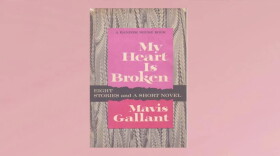 A reflection on Mavis Gallant’s “My Heart Is Broken,” a powerful story about violence, silence and the limits of our ability to understand another person’s suffering.
 -
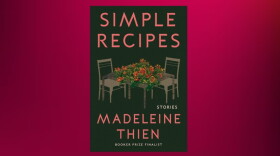 A review of Madeleine Thien’s story collection, "Simple Recipes." It's a quietly powerful collection about family, displacement and the ways love, memory and history shape the lives we inherit.
 -
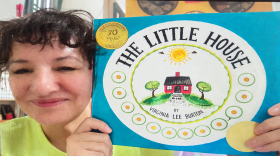 Mirror Books is a new podcast series from Book Public at Texas Public Radio about seeing ourselves — and discovering and knowing others — through books. Our inaugural guest is acclaimed author Sandra Cisneros, whose writing has become a mirror for countless readers. Listen as she discusses not just one mirror book, but many — and the ways these books she discovered from childhood through adulthood have remained important to her.
 -
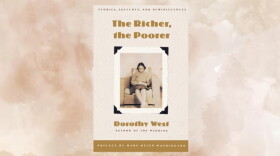 Dorothy West was just 17 years old when she wrote “The Typewriter,” a quietly devastating story about dreams, family and the painful cost of disillusionment. Peter Orner and Yvette Benavides discuss the story and the remarkable psychological insight of Dorothy West — and the worlds she went on to create for decades.
 -
 Stephanie Vaughn’s “Able, Baker, Charlie, Dog,” is a sharp, tender story about family, memory and the limits of understanding we experience in childhood — and that open up for us when we look back as adults. A daughter looks back on life with her father and tries to piece together the man he was, the man he wanted to be and the father she remembers.
 -
 What happens when admiration turns into envy — and envy takes hold of an entire life? Yvette Benavides and Peter Orner discuss José Emilio Pacheco’s haunting short story, “The Claw.”
 -
 Michael Cunningham, author of the Pulitzer Prize-winning novel The Hours, discusses his new book, Unsayable: A Life in Writing, and the mysteries of memory, imagination and storytelling.
 -
 What does it mean to love a place — and still long to leave it? In Alistair MacLeod’s haunting short story “The Boat,” a son struggles between family, tradition and the pull of a different life. On this episode of The Lonely Voice, we explore a powerful story about the sea, sacrifice and the choices that shape who we become.

© 2026 Texas Public Radio
Real. Reliable. Texas Public Radio.
Play Live Radio
Next Up:
0:00
0:00
Available On Air Stations


