Sign up for TPR Today, Texas Public Radio's newsletter that brings our top stories to your inbox each morning.
For some people, Frida Kahlo is an artist. For others, she has become a symbol of resilience, independence and Mexican identity.
And for the vendors and admirers who gathered over the weekend at San Antonio’s 10th annual Frida Fest, she was all of those things — and more.
The free, family-friendly festival at Wonderland of the Americas mall celebrated the life and legacy of Mexican artist Frida Kahlo in a way that transcended age and generations.
Music, art, dance, fashion and vendors filled the festival, while a Frida Kahlo look-alike contest brought together participants ranging from very young children to adults — dressed in Kahlo-inspired clothing, flowers and the artist’s signature unibrow.

The festival also featured an official Guinness World Record attempt for the largest gathering of people dressed as Frida Kahlo. The final count on Saturday was a respectable 80 look-alikes with costumes that wowed the audience.

But organizers say the event is about more than dressing like the famous artist.
Janie Villarreal McClinchy is the owner of Que Retro Arts and is one of the organizers of the event.
She said that the event has grown over ten years and that women, especially, are drawn to Kahlo's strength.
"She was all about women's rights," said Villarreal McClinchy. "And she was her own person. ... A lot of women look up to her because they want to be independent like she was."

Kahlo, who was born in 1907 and died in 1954, lived with significant health problems and chronic pain after childhood polio and a bus accident that left her with lifelong injuries.
She turned much of that experience into art, becoming one of Mexico’s most recognizable artists.
That history resonates with people who see their own struggles reflected in Kahlo’s life.

Finding strength in Frida Kahlo's story
Among Saturday’s attendees was Deborah Valenzuela. She has been collecting Frida-themed jewelry, dolls and other items for about 20 years.
Valenzuela said Kahlo’s story of living with pain and health challenges has given her a particular connection to the artist.
"I'm a breast cancer survivor," said Valenzuela. "When I was given the news that I had cancer, my world turned upside down, but I made up my mind that I was going to beat it. It was not going to beat me. So I've been cancer-free since 2018.
She shared that she drew strength on her journey from Frida Kahlo.
"When a life-changing event like that happens to you, you look at life in a different way. Frida, you know, she had 35 surgeries, she had a horrible back accident, and so she endured over 35 surgeries. She was all about color and life, and she did not let something like that bring her down. So she inspired me to take on that outlook."

For Valenzuela, Frida Fest was not simply an opportunity to celebrate a famous artist. It was a chance to celebrate someone who continued creating and expressing herself despite physical challenges.
That idea of adapting also brought Nina Guerra, a military veteran, to the festival.

"The story of Frida Kahlo has always inspired me," Guerra said. It's a story of resilience and being of Mexican descent and culture. It's something that I've always honored since I was a young girl. So it's a privilege to be able to come and celebrate her story here."
Kahlo spent much of her life adapting to a body that had been permanently altered by illness and injury. Her physical experiences became part of both her art and her public identity.
For Guerra, Kahlo's story of adapting also inspires her.
"I'm a military veteran," said Guerra. "I'm in the mental health space. I run a nonprofit serving the veteran population in mental health. So when I think about that ... her story resonates now, even more, because ... the accessibility issue. ... She was a revolutionary."
For Guerra, the idea of honoring Frida Kahlo is about finding ways to move forward when the world does not always accommodate us. "Her voice," said Guerra, "I think even more now, empowers a lot of not only women but people of color and (sexual) orientation ... to really use their voice to speak out about what they believe in."
Sharing culture with the next generation
For another attendee, the festival offered a different kind of lesson.

Jessica Gonzalez brought her three daughters to Frida Fest because she wanted them to see and appreciate their Mexican heritage and culture. It took a little convincing.
"We showed them some pictures and right away they did not want to get dressed," said Gonzalez. "They were like 'Oh my gosh like no ... we don't like that. That's not our style.'"
Gonzalez's sister found the perfect items for the little Fridas and pulled their looks together. A comparison to a favorite movie helped, too.
"I kind of related it to Coco and explaining ... the importance of remembering these kinds of traditions and our culture," said Gonzalez.
Her daughters were among the children who helped give Saturday’s look-alike contest a multigenerational feel.
Little girls in colorful dresses and flower crowns posed for photos alongside teenagers and adults — and even some men — who had transformed themselves into versions of Kahlo.


The contest became both a spectacle and a celebration of how differently people interpret the artist’s image.

For some participants, the flowers, shawls, jewelry and unibrows were part of the fun. For others, the look was a way of connecting with an artist whose image has become inseparable from Mexican culture.

Inspired by Frida Kahlo: A place for artists and makers
Frida Fest also provided a marketplace for local artists and small businesses.
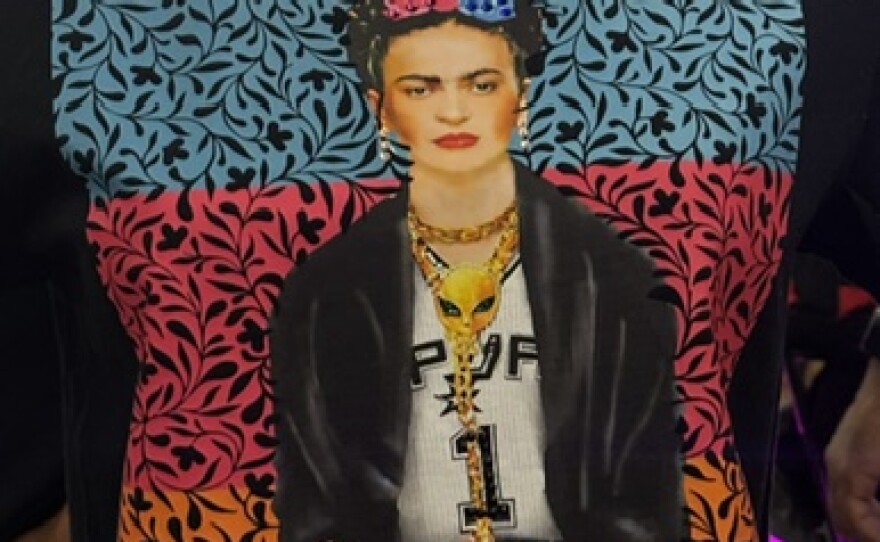
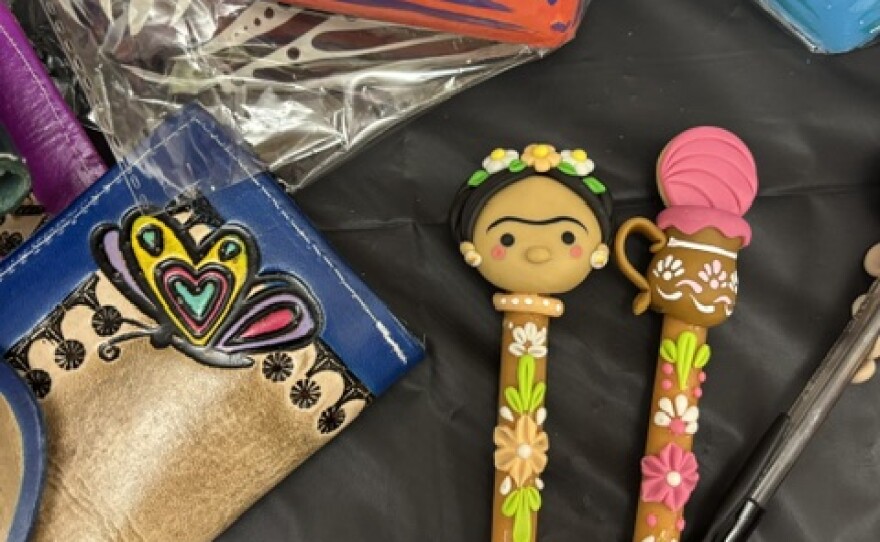
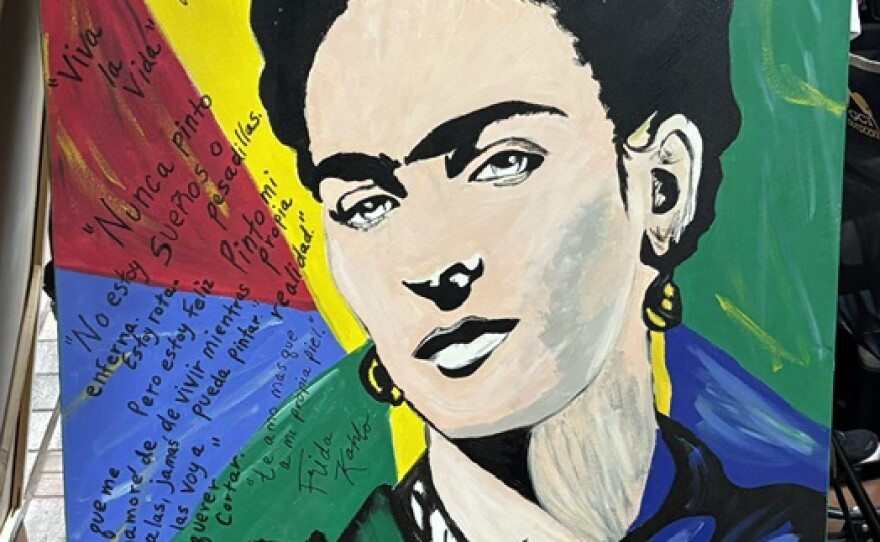
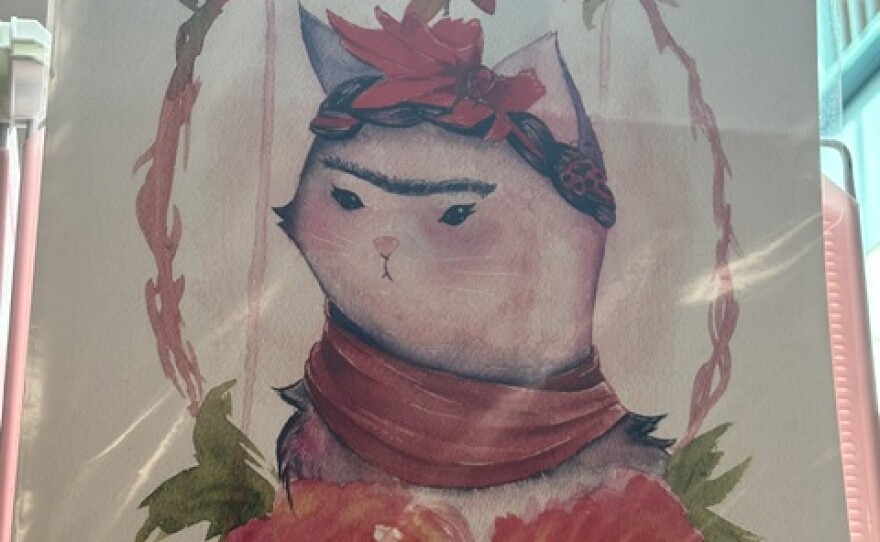
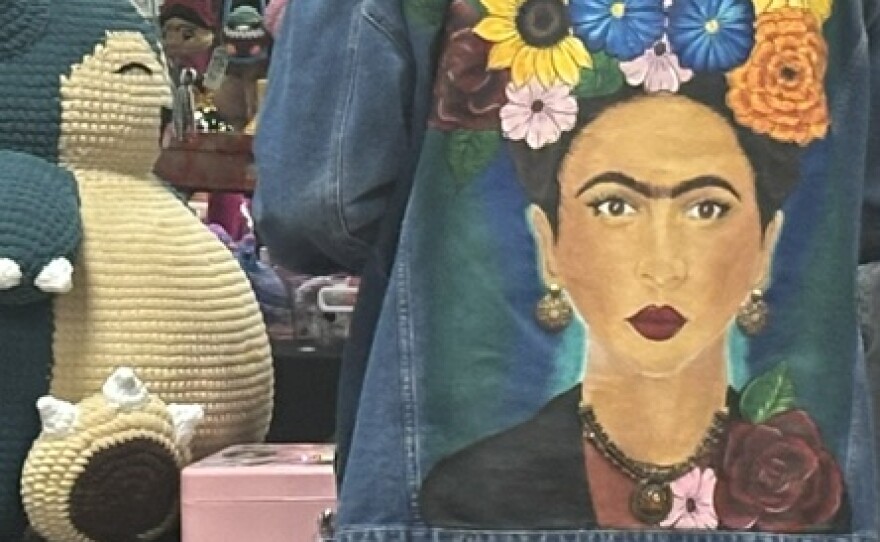
More than 60 vendors and galleries were expected at this year's festival, giving attendees a chance to shop for handmade art, jewelry, clothing and other Mexican- and Frida-inspired goods.
Among the artists was Diana Larson, better known as DD. Her online shop is DeeDee's Mixed Media.
For vendors, the festival is an opportunity to make sales. But it is also a chance to put their work in front of an audience that already understands the cultural influences behind it.

Larson creates many of the wares she sells. That includes handmade earrings with inscriptions of quotations by Frida Kahlo.
"'Feet, what do I need you for when I have wings to fly?'" Larson quoted.
She pointed to skeleton-themed items and said, "She hung skeletons by her bed to remind her that she's eventually gonna die."
A painter's palette is another iconic symbol connected to Kahlo, as are parrots, which she kept in her garden, and which also figure in her paintings.
Larson surmises that so many people admire Kahlo — even if they don't know many details of her life.
"I think people are fascinated with her life and that she struggled so much," said Larson.
And for visitors, the mercado offered another way to experience the festival beyond the stage and the look-alike contest.