Sign up for TPR Today, Texas Public Radio's newsletter that brings our top stories to your inbox each morning.
It’s been nearly six years since the Robert L.B. Tobin Land Bridge opened in Hardberger Park in December of 2020.
It was created to be a wildlife crossing providing safe passage over a six-lane highway.
Wendy Leonard is the nature preserve officer at Phil Hardberger Park, essentially serving as the park’s manager. She says the park is divided by Wurzbach Parkway, creating a major obstacle between its two sides. it was so much of an obstacle that the two sides of the park had to be opened at two different dates.
“We have two sides of the park that were opened at different times,” she said. “The Blanco Road side opened first, and that was in 2010. And then the Northwest Military side opened in 2012.”
Those two sections sit on opposite sides of Wurzbach Parkway. The land bridge was designed to give wildlife, and people, a safe way to cross between them.
“Just linking up habitats so that way wildlife can go from one side of the park to the other to get water, to get any sort of resources, and to find others of its kind,” Leonard said. “Before the land bridge was even finalized, wildlife was using it.”
Leonard says the $23 million bridge was also equipped with cameras to track wildlife activity. The video of animals crossing is proof positive that the land bridge wasn’t a failure.


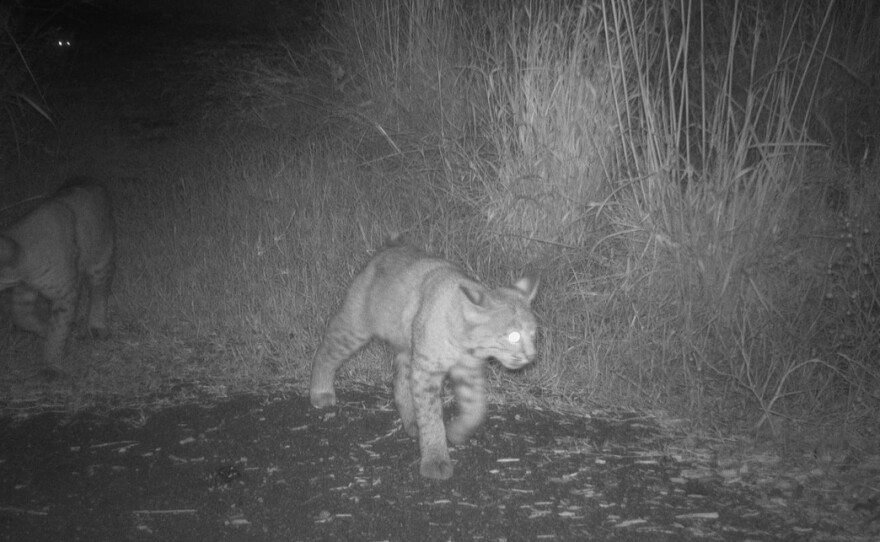

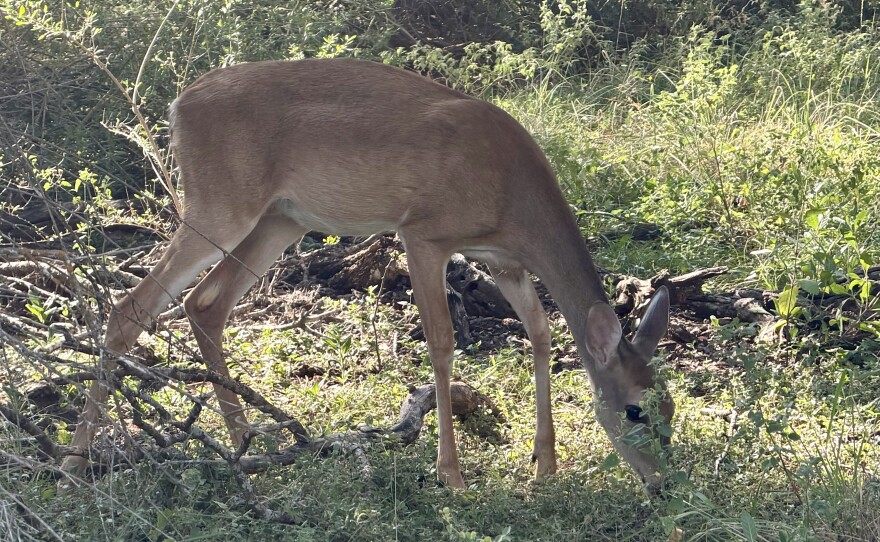
“We have set up 12 wildlife cameras as part of a wildlife study to show the use of the land bridge by certain species of wildlife,” she said. “Definitely for coyotes and for deer, white-tailed deer, the land bridge is being used in its entirety. And we do have evidence that bobcats are using the land bridge as well, moving from one side.”
As Leonard noted, the young landscape faced an early test from extreme winter weather.
“We had the 'snowpocalypse' and we did lose some trees. More on the land bridge, the top of the land bridge itself,” she said.


Justin Moore Airborne Aerial Photography

In the years since, trees and native grasses on the bridge have filled in considerably, giving those who visit a more natural experience.
“It's great exercise, and I like the beauty," said Vivian Stewart Juarez, who strolled through the park with a friend. “I like the nature, and some of the most beautiful things in the world are free. And so this is one of them.”
Juarez said she’s been coming to the park for years, and she’s watched the landscape change.
“Oh my goodness, yes! It was all just dirt and little shrubs, and now it's filled in,” she said.
The native trees and grasses have grown dramatically since 2020.
“This land had never been developed. There were no paths. There were no roads. The timber was not cut, so it was an ideal spot of land,” said Melissa Kazen, the executive director of the Phil Hardberger Park Conservancy.
Kazen noted that the park’s recent history stretches back to its days as a dairy farm.


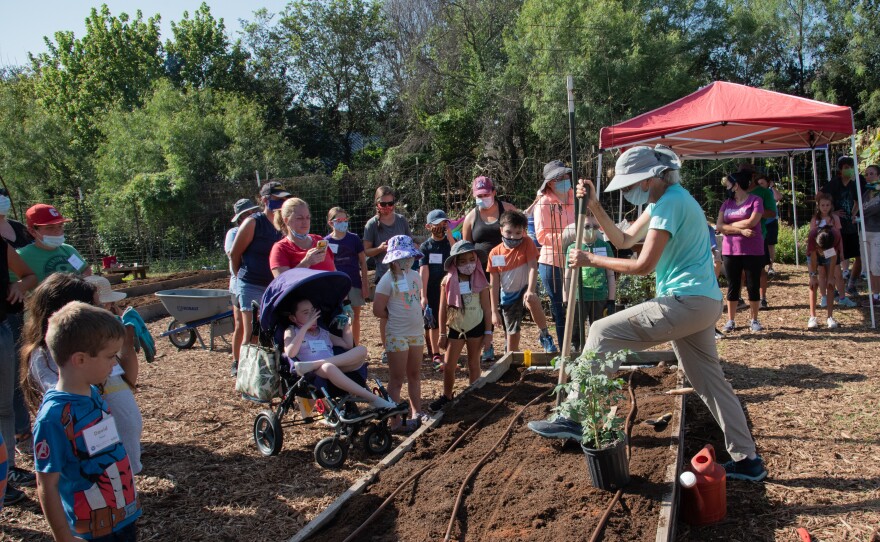


“Originally, this land that Phil Hardberger Park sits on was a dairy farm, and it was owned by a family called the Voelckers,” Kazen said.
Max and Minnie Voelcker once owned a roughly 1,000-acre dairy farm here. After Minnie’s death, the property ultimately became part of the Voelcker charitable trust, while San Antonio continued growing around it. The city purchased more than 300 acres of the property in 2007 to establish the park.
“The trustees knew that Mayor Hardberger was looking for such land, and they contacted Mayor Hardberger, and he and then City Manager Cheryl Scully came out here the next day, looked at the park, and said, ‘We've got to buy this for the city of San Antonio.’”



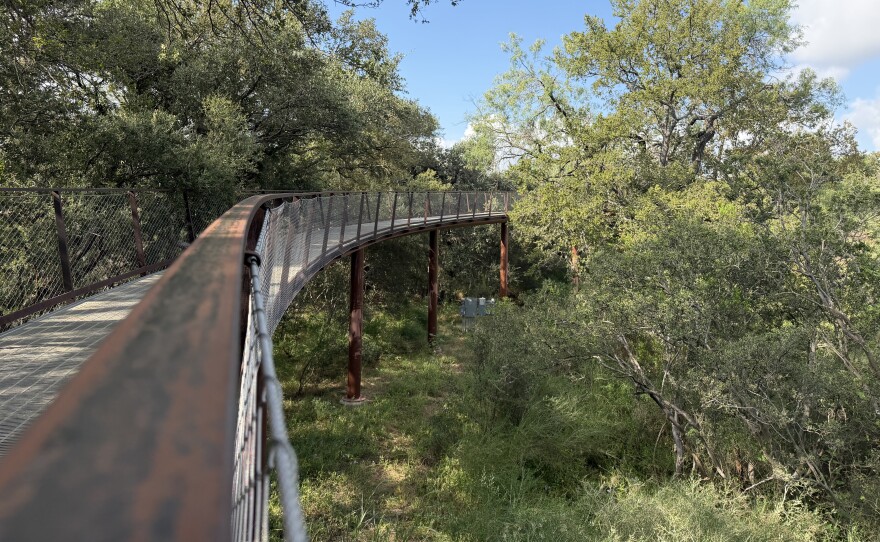
The city bought the property, and the first section of Phil Hardberger Park opened in 2010.
Bill Hockersmith lives nearby and visits often.
“Four or five minutes to drive here, walk five or six miles, and then go home,” he said.
Hockersmith says he regularly walks five or six miles at the park. That would be impressive for anyone, but perhaps more for him.
“I don't go very fast. I'm gonna be 80 Sunday, I'm doing the best I can,” Hockersmith said.