

Momentos Musicales
Weekdays at 2 p.m. on KPAC 88.3 FM, during Hispanic Heritage Month
Celebrating the rich history of Central and South American stories in the world of classical music.
Latest Episodes
-
 Y finalmente, this year's season of "Momentos Musicales" concludes with the mixing of folk and classical musics in Mexico.
 -
 TPR's James Baker shares the many rhythms of Brazilian music.
 -
 In this episode of Momentos Musicales, host James Baker traces the history of the tango from the mid 19th century to Astor Piazzolla in 1987.
 -
 Eugenio Toussaint, Arturo Sandoval, and Paquito D'Rivera each have a musical personality of their own, yet there are similarities. James Baker shares some of their best music, and the composers' backgrounds, in this episode of Momentos Musicales.
 -
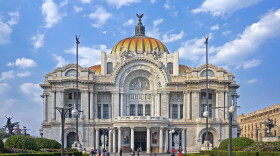 TPR's James Baker recalls hearing the mix of sounds while living and working in Mexico City in the 1970s and early 1980s.
 -
 African and Caribbean elements met with European music as early as the mid 1800s.
 -
 Dust off your passports and cross into Mexico, Central and South America. Not only can you hear great music from the Americas music live, on the streets and in venues both grand and small, but you learn a lot about the varied cultures within Pan America.
 -
 Carlos Franzetti offers up suggestions for finding great Latin American tracks still in print on compact disc.
 -
 Meet two pianists, one who plays pretty much what's on the page, the other who's tuned in to jazz as a pianist and a much wider array as a composer.
 -
 When conductor Miguel Harth-Bedoya was hired as Music Director of the Fort Worth Symphony Orchestra (FWSO) in the year 2000, it meant a big change for that orchestra.


