Sign up for TPR Today, Texas Public Radio's newsletter that brings our top stories to your inbox each morning.
A San Antonio Zoo program is using science to reverse the disappearance of Texas horned lizards.
Scientist Dante Fenolio heads the project with the objective to help bring those lizards back in Texas.
“We have been working for over a decade to try to come up with an efficient way to keep them well and happy in the lab, to breed them in the lab, and then to take the offspring from that process and put them back out onto the landscape,” Fenolio said.

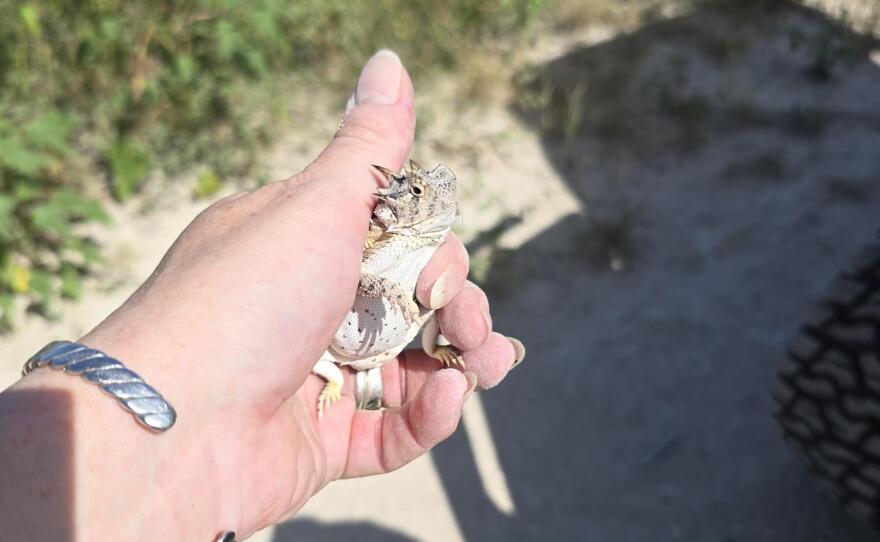
Lab efforts that keep them healthy enough to breed allows Fenolio also to re-introduce the horned lizards onto landowners’ properties, which could spell a solid future for them.
“With those rehabilitated pieces of land, we have been busy releasing the lab-produced baby Texas horned lizards, and then we monitor them after that,” said Fenolio.
Older Texans remember a time when horned lizards — we called them "horny toads" for some reason — were quite easy to spot and catch. Unfortunately for them, finding a home is among the many difficulties they faced.
“The problem is back then, there were a lot more wild places, right? So a lot of the places where folks would remember seeing them are now strip malls, or roads, or neighborhoods,” he said.
That San Antonio Zoo program to help breed and release Texas horned lizards in the wild is showing some success.
“We wanted to make sure that we collected data at every step of the way, so every single baby that's put out onto the landscape is genetically fingerprinted first, so that if we encounter that animal sometime in the future, not only can we identify it, but then a whole bunch of other data comes in,” Fenolio said. "How much has it grown? What is the change in mass? How much has it moved?"
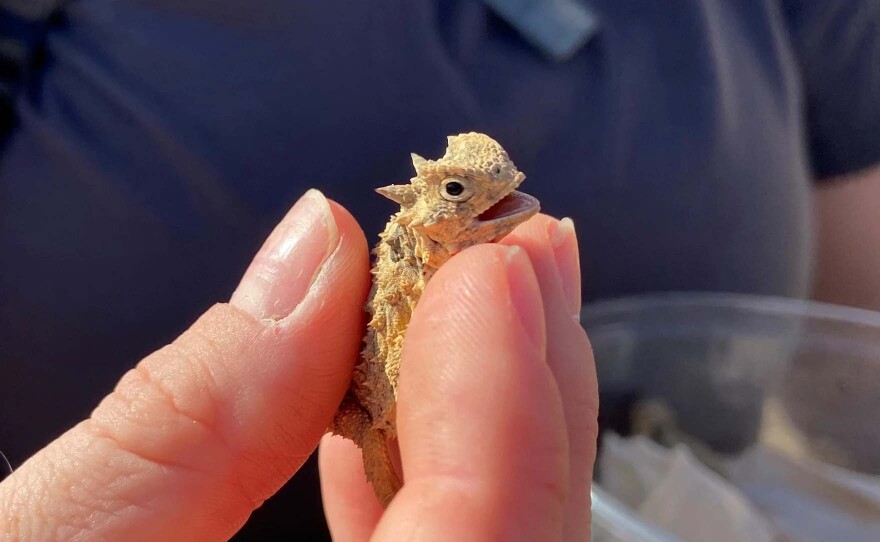

Fenolio said using the scientific method has allowed his team to track the results, seeing what works, and what doesn’t.
“When we started with Texas horned lizards, there wasn't a guide that we could go to that told us this is how you keep them in the lab,” he said. “How you get them to breed? This is how you raise up the babies.”
Fenolio and his staff have been using science to unlock the secrets that will ensure a healthier future for horned lizards.
“We hope that there are others that will join us and work with Texas horned lizards, and that way we can bring them back in a significant and meaningful way, and we can make sure that we keep Texas horned lizards on the landscape for many future generations to come,” said Fenolio.