Sign up for TPR Today, Texas Public Radio's newsletter that brings our top stories to your inbox each morning.
Approximately 15% of American adults report some trouble hearing, according to the National Institute of Deafness and Other Communication Disorders.
Cochlear implants are helping a growing number of people experience sound, but they don't restore typical hearing.
The implants offer both promise and limitations.
Actress and disability advocate Tiffany Storrs lost her hearing shortly after giving birth to her first child in 2007. Storrs had fertility issues and after several miscarriages, she decided to undergo fertility treatment.
When she gave birth to her daughter, that’s when she realized she couldn’t hear her baby's cries.
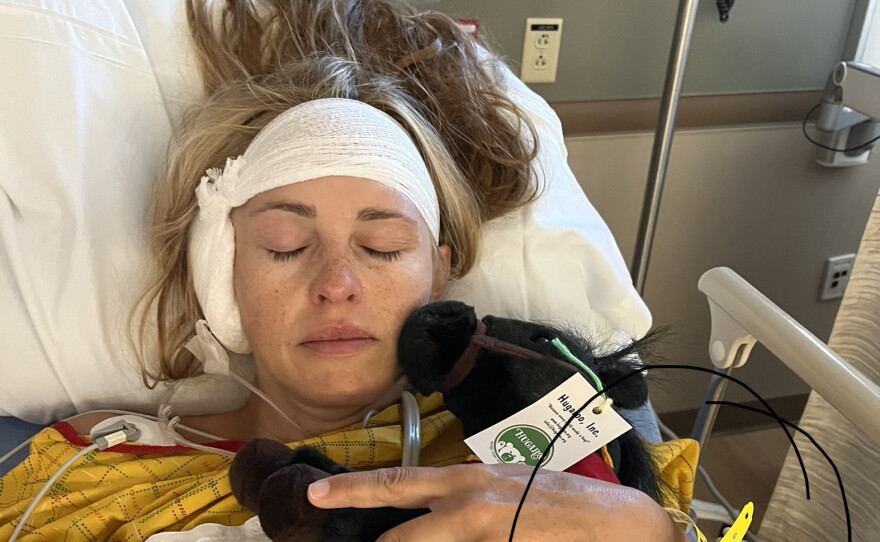
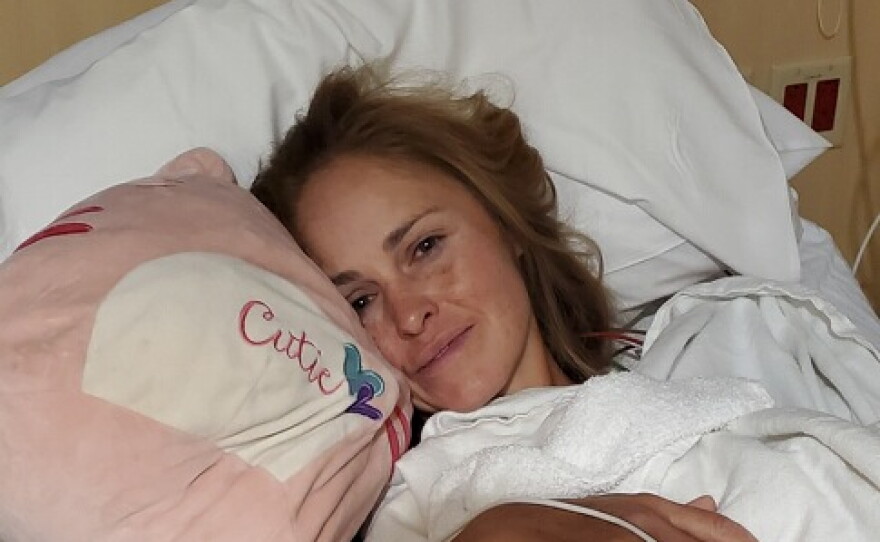
“I know this all too well because she was a screamer. She was very colicky, and she could scream, shatter a window if it was possible,” said Storrs. “I could hear her, and then I could not. Just like that.”
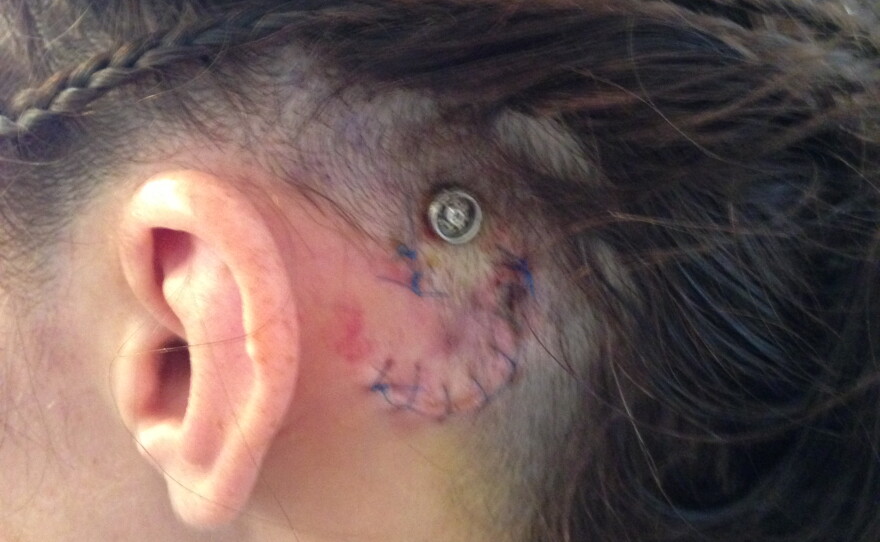
Storrs was diagnosed bilaterally deaf after having her second child. She wears two cochlear implants as well as a pacemaker.
Part of a cochlear implant is surgically embedded inside the ear, and the other part is worn externally.
Sarah Ammerman is an associate professor of deaf education and hearing science at UT Health San Antonio. She explains how the implants work.
“So, for you or I right now, we have tons of hair cells in our cochlea. So when you're hearing, there's a pathway where the sound gets to your cochlea. And then the hair cells bring that sound to your auditory nerve, and then your brain interprets that as sound,” said Ammerman.
“For a lot of people who are deaf and hard of hearing, those hair cells are absent, and so a cochlear implant basically replaces those hair cells. So there's an electrode array that's inserted into your cochlea. Those electrodes communicate with your auditory nerve.”
But hearing through an implant can take some getting used to. Ammerman says some people initially describe sounds as cartoon-like or artificial.
“But most people who consistently use it and get past that part and go through, you know, you have to go through intense therapy with an audiologist, a speech language pathologist,” said Ammerman.
Tiffany Storrs experienced that adjustment herself and has self-published a book about it, “Adaptability: A True Story About Turning Pain into Purpose.”
She says one of the biggest misconceptions about cochlear implants is that they restore typical hearing and eliminate the need for accommodations.
“But one thing I think is so incorrect is that because I use assistive technologies, that means society likes to think, ‘oh, she's fully up to speed.’ A cochlear implant doesn't restore human hearing. It's a tool that I use on a daily basis for sure,” said Storrs.
“I still need access, and even though I'm doing a good job in keeping up with my implant and adapting so well, that doesn't mean I still don't need accessibility accommodations.”
Storrs underwent therapy to adapt to her implants. She also learned sign language and understands why some people choose not to use the devices.
“And that's where you see a lot of people just choose to adopt sign (language) and communicate through sign language, and I did learn sign in the process, too, because there're times where I don't like it either,” said Storrs.

Cochlear implants have also sparked debate within the deaf community. Ammerman says some people believe children with hearing loss should focus on learning to listen and speak rather than using sign language. But she says that view unfairly dismisses the value of sign language.
“People who say that you're creating more of a barrier to communication by saying ‘here, you're going to use ASL (American Sign Language)’ and not learn to listen and talk,” said Ammerman. “And so, I think that those are some unfortunate things that people say about being part of deaf culture, learning ASL.”
Others in the deaf community see deafness as a cultural identity rather than something that needs to be corrected. Ammerman says some critics worry cochlear implants can threaten that identity.
“And saying that it's killing a culture, and that you're stealing someone's identity,” said Ammerman. “That if you are deaf, it's not a disability. It's a ticket — an entry to this amazing, wonderful culture. And by giving someone an implant, you're stealing that from them.”

Storrs says the larger issue is ensuring that people with disabilities have the access and support they need, regardless of the technology they use. She says society has made progress but still has a long way to go.
She compares society’s treatment of individuals with disabilities to a person who can only crouch and is unable to stand.
“We didn't come this far to just come this far, in terms of accessibility and understanding how narrow-minded societal thinking has been surrounding disabilities up until, I would say, the last five years, maybe even the last three years,” said Storrs.
“ ’Accessibility’ — I always have a hard time when someone treats it like a buzzword," she said. "It is mainstream, and it's only going to get bigger until it's fully systemized. We still have a long, long ways to go.”
Storrs is on a mission to share her story and remind the world that there's more to being heard than simply being able to hear.