Sign up for TPR Today, Texas Public Radio's newsletter that brings our top stories to your inbox each morning.
Engineers had designed every inch of the San Pedro Creek Culture Park several years back, when on a cool January day in 2020, workers encountered a speed bump in the project: they came across a stone foundation that would open up a whole new line of inquiry.
That unexpected discovery was evidence that the St. James African Methodist Episcopal Church had been there in the 1870s and 1880s.
Construction on that portion of the San Pedro Creek Culture Park was called off until project leaders could study it more closely.
Eventually, work on the creek away from the church site resumed in early 2021. The decision was made to ensure the site would eventually include historical designations and interpretive signs integrated into the larger project.
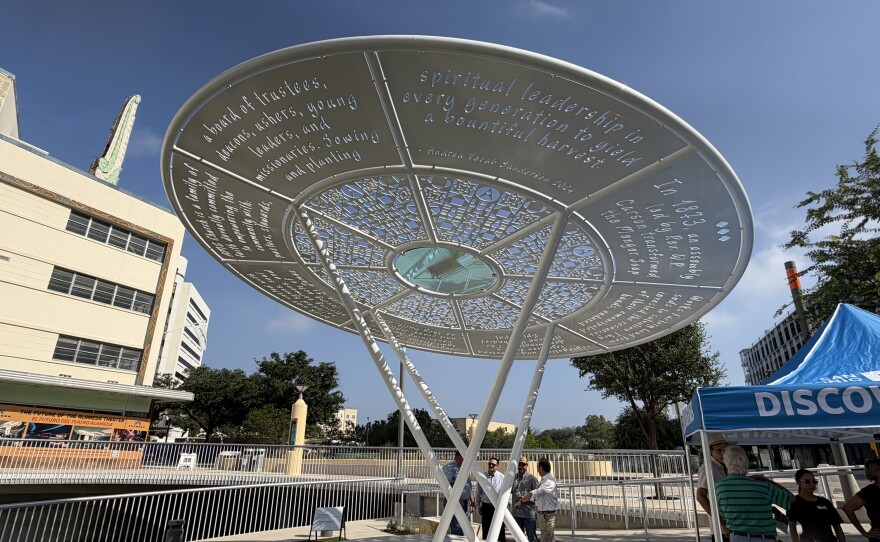
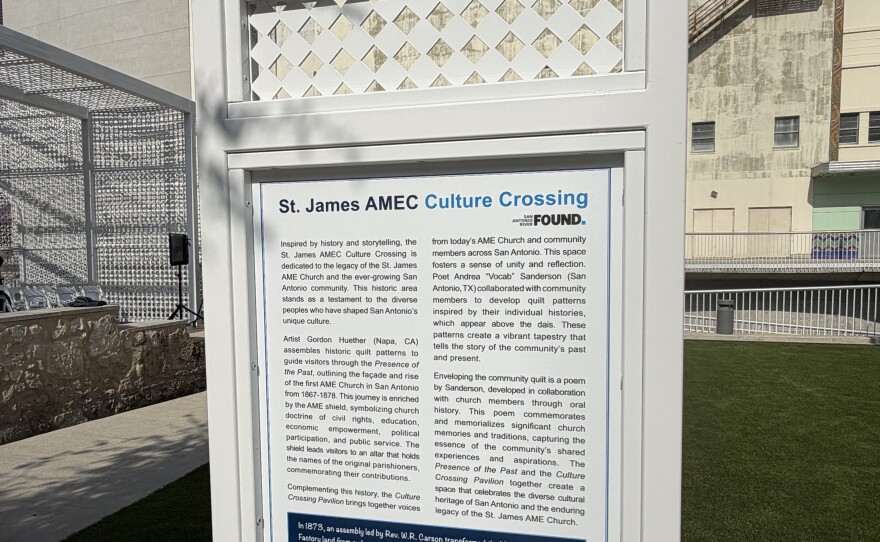
The San Antonio River Authority also planned for and revealed the way officials would honor the church and its legacy. There would be two art installations in the church’s original footprint and in the location next door.
The large new art installation called "Presence of the Past" was unveiled on Thursday morning on the San Pedro Creek Culture Park.
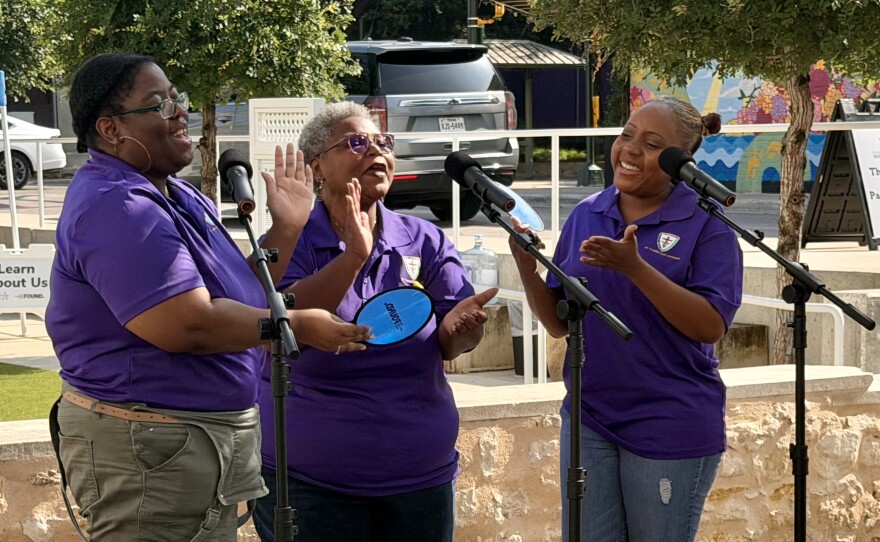
The San Antonio Gospel Heritage Choir sang at the beginning and end of the dedication, opening and closing the ceremony and giving a taste of worship from the past.
This location on the east side of San Pedro Creek at Houston Street was once a soap factory. It’s also where the city’s first downtown Black church once stood.
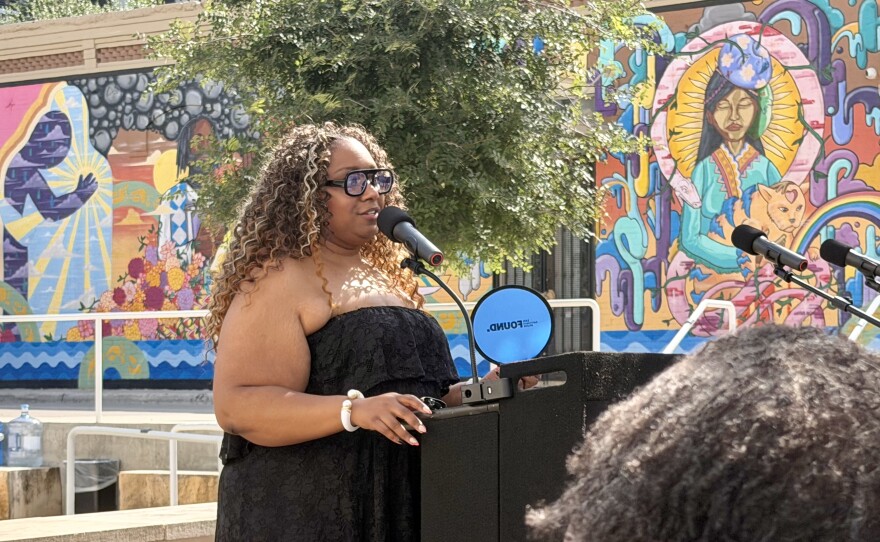
Former San Antonio Poet Laureate Andrea Vocab Sanderson felt the call of history as her part of the ceremony.
“Our history will always call to us, and the things that need to be spoken of and need to be documented will come up,” she said.
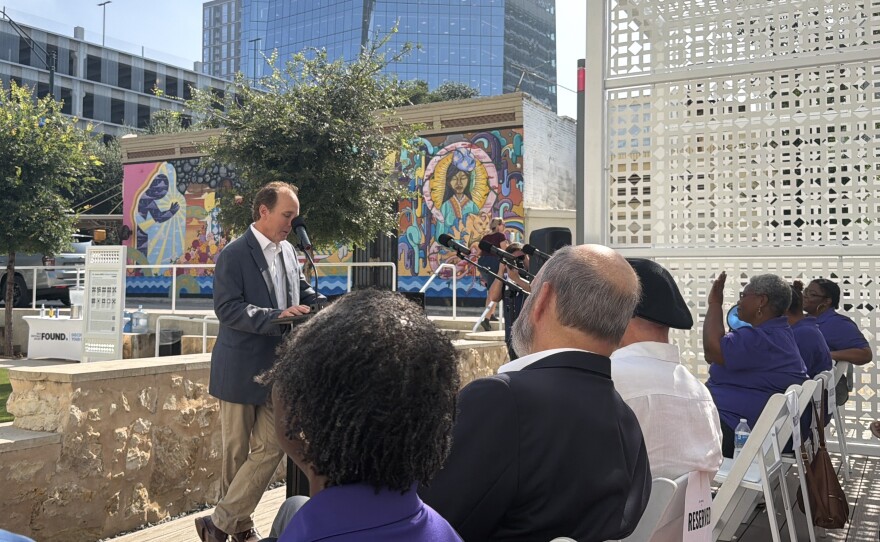
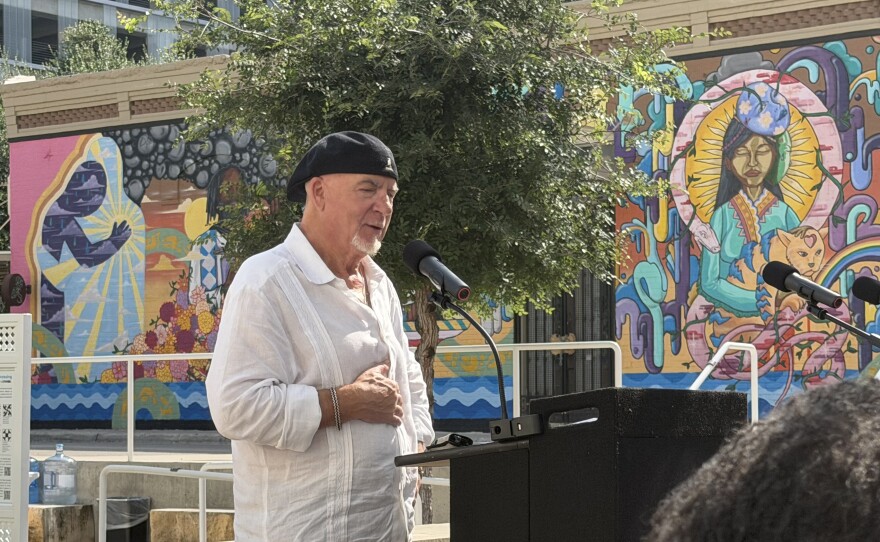
Sanderson was there to recite and perform a poem written about the church and its people. She notes that the site of the church has an unexpected parallel.
“I think it's interesting that, you know, the place that was meant for cleaning and creating soap became a place of spiritual cleansing,” Sanderson said.
California artist Gordon Huether was delighted to have been chosen to help execute the project.
“I remember being inspired by the words of Alex Haley, the author of Roots, who once said, in order to understand where you are going, it's important to understand where you've already been,” he said.
Huether’s muse was all about doing justice to those who came before.
“I was thinking about the shared African American experience with the freedom quilts,” Huether said. “We're standing on the shoulders of the 300 original congregants, and so it made me think of using these patterns that are transcribed from quilt patterns into laser cut steel.”
Looking carefully, one can see the repetitive patterns of quilts in the white steel.
The San Antonio River Authority’s Mario Siller said he is a fan of this kind of project.
“I just love how projects like this bring community together, and I think that if there's any time that we need it more than ever, it's now,” Siller said.