

Sign up for TPR Today, Texas Public Radio's newsletter that brings our top stories to your inbox each morning.
For many people across Texas, there's no better way to start the morning than with the aroma of sweet, buttery, freshly baked pan dulce, or Mexican sweet bread.
From sugary conchas — or seashells — to nubes — soft, airy buns that resemble fluffy clouds — people across the U.S. often start their day by having a piece of pan dulce with a steaming cup of coffee. But it’s more than just a sweet treat — it’s a tie to people’s culture and identity.
Just walking into a panadería and being welcomed by the aroma of butter, sugar, and cinnamon is enough to awaken childhood memories.
A recent master class in San Antonio, Texas, led by a Mexican pastry chef, brought professional and home bakers alike to learn how to bake pan dulce at home — all while sharing the deep-rooted traditions, and stories attached with these iconic pastries.
“We used to buy pan dulce out of the trunk of an elderly man's vehicle when I was young. It stayed with me for forever," reminisced home baker Rachel Najera.
Najera, who grew up in the Texas border town of Del Rio, was one of a dozen bakers who last month came together at San Antonio’s The Bake Lab kitchens for a hands-on workshop series on all things pan dulce.


The workshop was led by Los Angeles-based Chef Alex Peña, author of the cookbook The Mexican Bakery, a comprehensive guide to Mexican pan dulce for home and professional bakers. Participants in the class covered how to make bizcocho dough, similar to the French brioche. It's a foundation of many of the varieties of pan dulce.
Bakers included Claudia Hurt, a pastry instructor at a community college in Corpus Christi. She and other bakers followed Chef Peña’s instructions carefully. They portioned and shaped out the dough into small, fluffy balls before stamping the iconic shell-like sugar topping on top.


Hurt grew up in Mexico, where pan dulce is a mainstay in households.
“I would walk with my grandpa to the bakery every day to buy campechanas and all these different kinds of things, conchas, that now I can enjoy," said Hurt. "So, every time I make something like that at school, I tell them, 'Oh, this reminds me of my grandpa.'”
While there isn’t a concha emoji yet, the popularity of pan dulce continues to grow. A morning concha is more popular than a morning muffin in parts of the Southwest. Even mainstream grocery stores are now stocked with pan dulce to start the day.
Hurt said people all over the country can take a bite of Mexican culture.
“I think it’s bringing people together. That’s what I love about pan dulce," said Hurt.
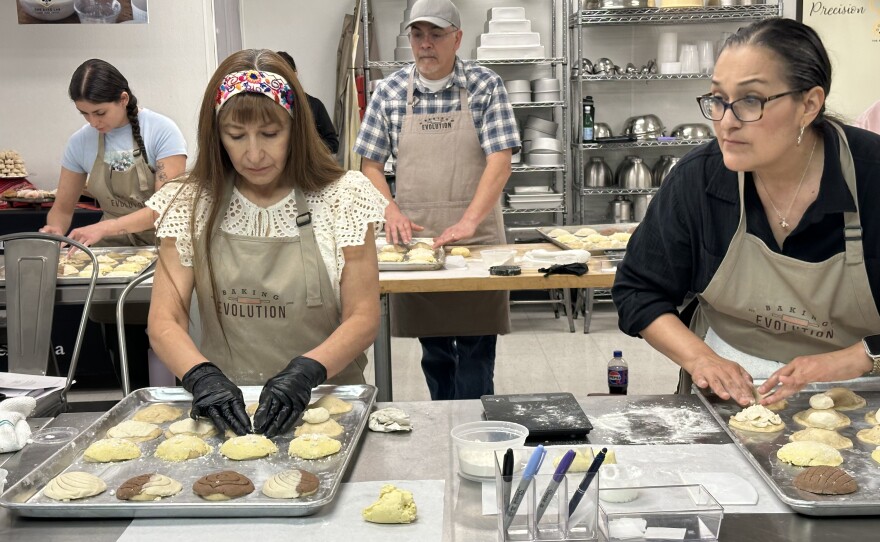


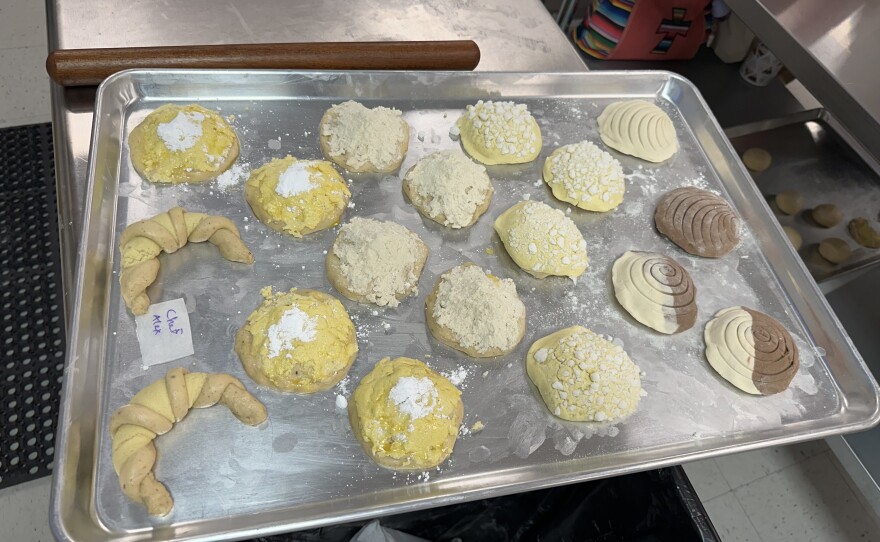

As the first batch of homemade conchas goes into the oven, bakers in the class continue topping their pieces of unbaked bizcocho dough with different sugar toppings that will turn into volcanes, or volcanos, and cuernos bizcocho, a crescent-shaped pastry.
Then the aroma of sugar fills the room and a timer rings, signaling that the first batch of conchas is done.
Though Chef Peña argues the conchas could use a few more minutes for the sugar topping to cool to its perfect crumbly consistency, the anticipation is too great.

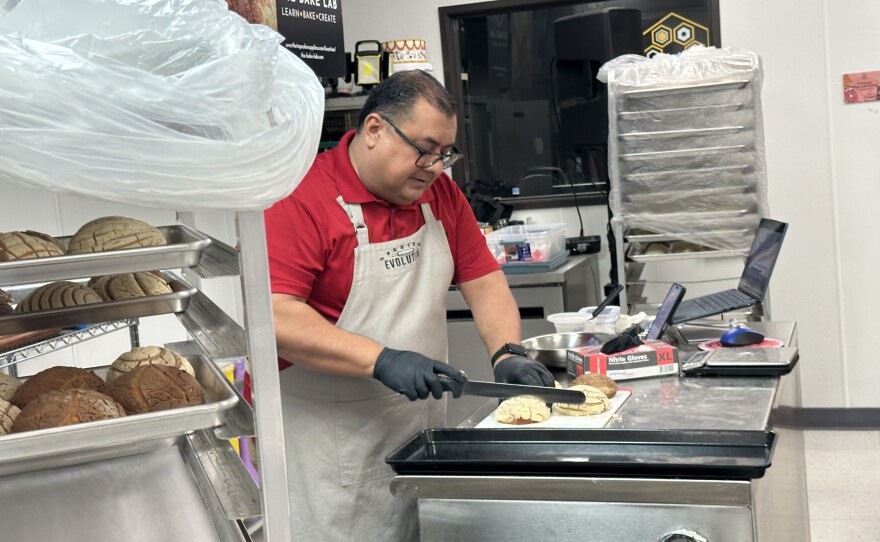
For home baker Rachel Najera, the first bite of the warm concha is heaven. Everyone around her agrees.
Najera says the taste of pan dulce ties her to Latino culture.
"It just makes you want to honor the traditions of the pan dulce. Honor my culture. It makes me feel proud when I am trying to kind of recreate the experience from my childhood," Najera said.
Bakers in the class walked away with enough homemade pan dulce to last a few days and a desire to preserve the tradition for generations to come.

