Sign up for TPR Today, Texas Public Radio's newsletter that brings our top stories to your inbox each morning.
Just south of the San Antonio Zoo sits one of the city’s most beautiful landmarks — a place with a history marked by both injustice and redemption. Within its 11 acres, a painful chapter unfolded decades ago. Today, that wrong has been righted, and the people affected are honored.
On Saturday, Oct. 10, San Antonio celebrated the 100th anniversary of Jingu House, a historic structure in the Japanese Tea Garden with a story as unusual as it is remarkable.
The Kodo Taiko Drummers from Corpus Christi opened the celebration. Their music echoed through the garden as dozens of people gathered within its massive stone pavilion.
Mary Jane Verette, CEO of the San Antonio Parks Foundation, welcomed the guests.
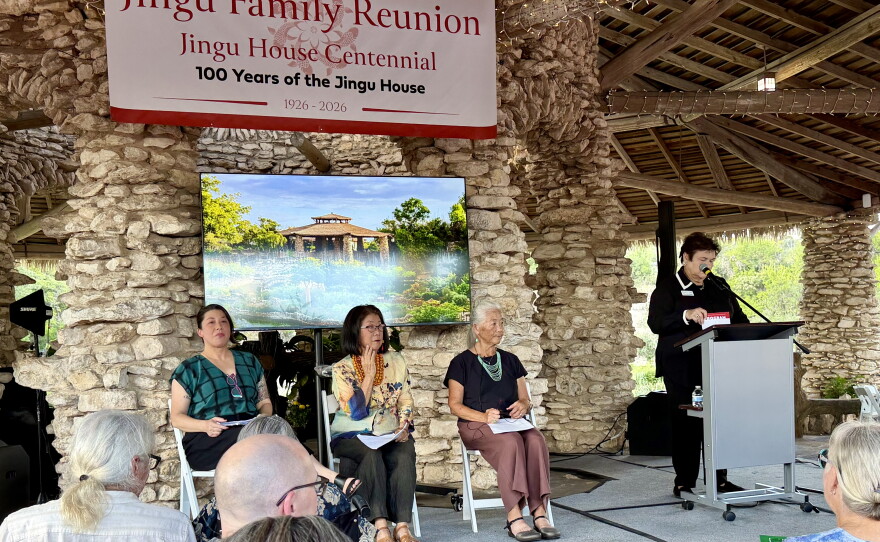
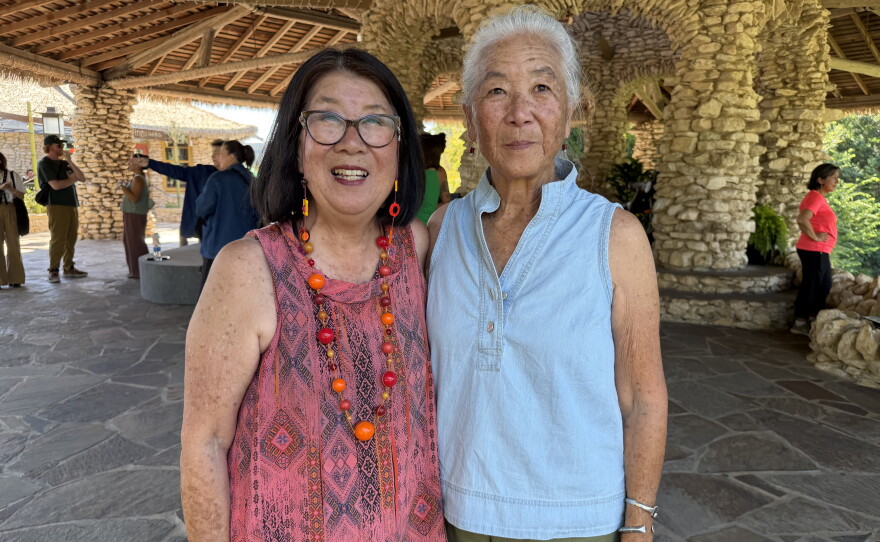
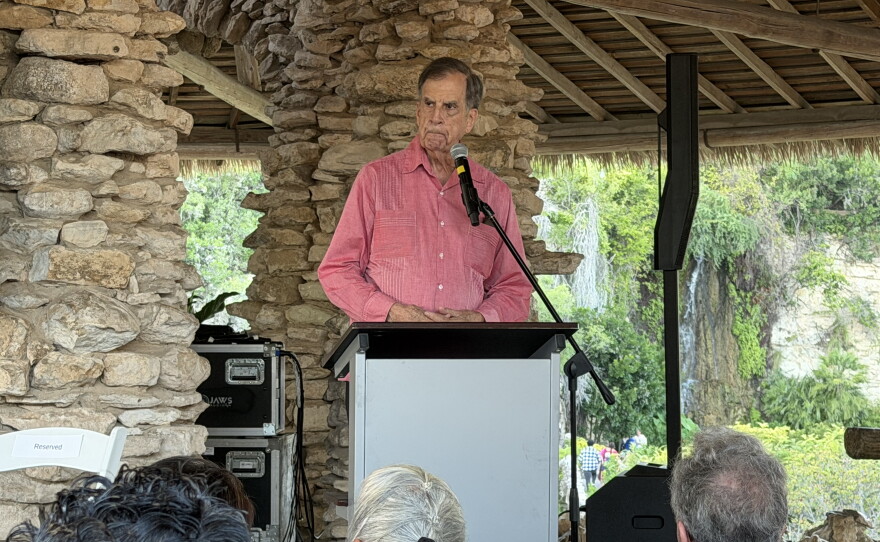
“Thank you so much for coming out to the Japanese Tea Garden today,” she said.
Verette said they were standing in a place that held more than a beautiful landscape. It was a place of history, where young San Antonians have much to learn.
“I love this place, and every school child in San Antonio comes to the Japanese Tea Garden at some point,” Verette said.
Children may enjoy field trips to the Japanese Tea Garden, but a hundred years ago, the children of one family actually lived in the garden.
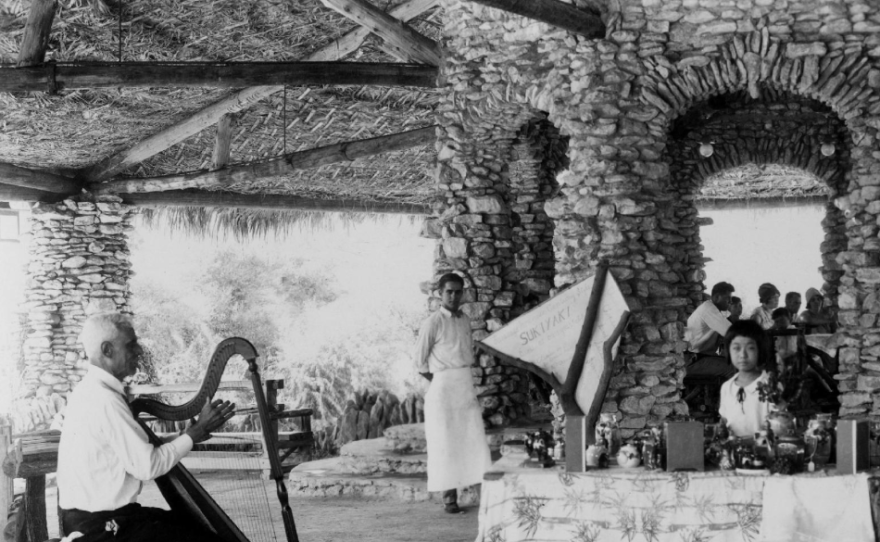
Barbara (Barb) Yamadera Cabot’s grandparents — Eizo and Miyoshi Jingu — lived on the property as caretakers for decades with their eight children. The family also opened an eatery that served light lunches and hot tea.
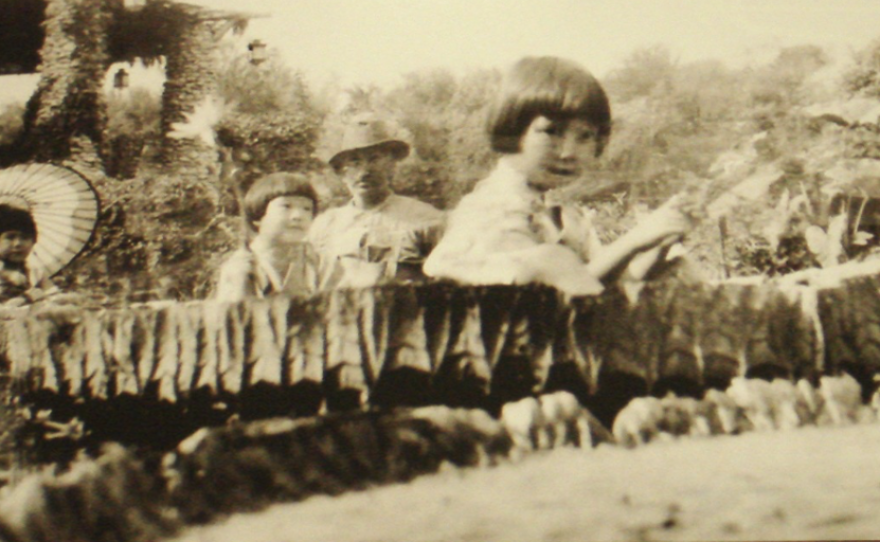


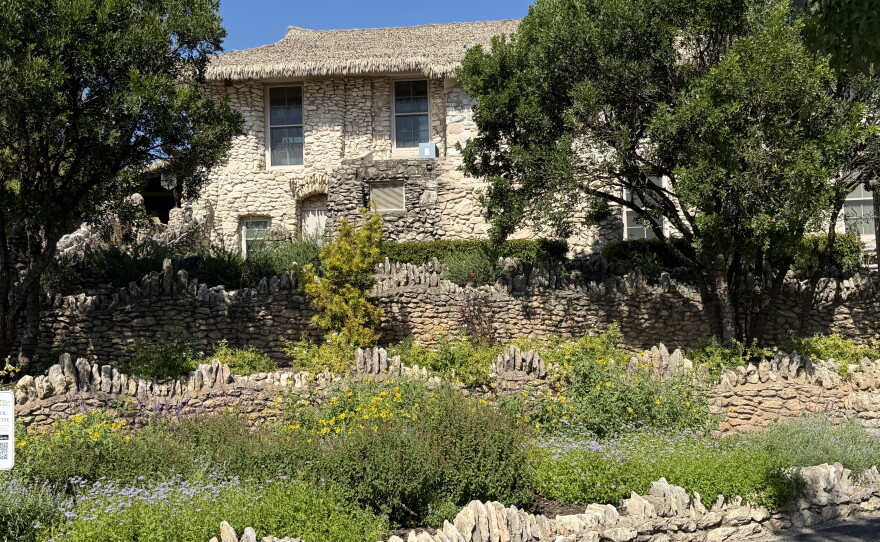
“One hundred years ago, the Bamboo Room in the Jingu House opened to the public,” Cabot said, pointing to the stone building nearby. “That's that house right there. This was the beginning of a wonderful era for the Jingu family, which continued for 23 years.”
Barb’s grandparents were Japanese Americans who had emigrated to San Antonio. Five of the family’s six girls and two boys were born in what is now the Jingu House.
“My grandfather Eizo worked as a watercolor landscape artist at the Gunter Hotel,” Cabot said. “It was at the Gunter Hotel that my grandfather met Ray Lambert, the San Antonio parks commissioner.”
To help locals who struggled with pronunciation, Eizo gave himself the nickname “Kimi.”
While Kimi and Lambert envisioned what would become a formal Japanese-style garden, the land had a very different past. It had once been a rock and cement quarry before the city acquired the property and faced a question: What should become of it?


Historian Lewis Fisher considers the Japanese Tea Garden one of San Antonio’s most impressive features at that time, just after the Alamo.
“I think the Japanese Tea Garden was really number two for a long time until the River Walk came along, because after (the garden) opened in 1917 or 1918, there were constant tour buses and groups here,” Fisher said.
He noted that before being remade into a park, the property had served a less charming function.
“It was a garbage dump for about seven or eight years. It was pretty close to Monta Vista, and as the houses crept in, when there was more garbage and more aroma, I think the agitation got greater,” he said.
The garbage was eventually hauled away.
In its place, a koi pond was designed, and eventually the whole garden was constructed. The structures, pathways and retaining walls seen today are all made of limestone from the preceding quarry.
What was likely the city’s ugliest 11 acres became perhaps its most beautiful.

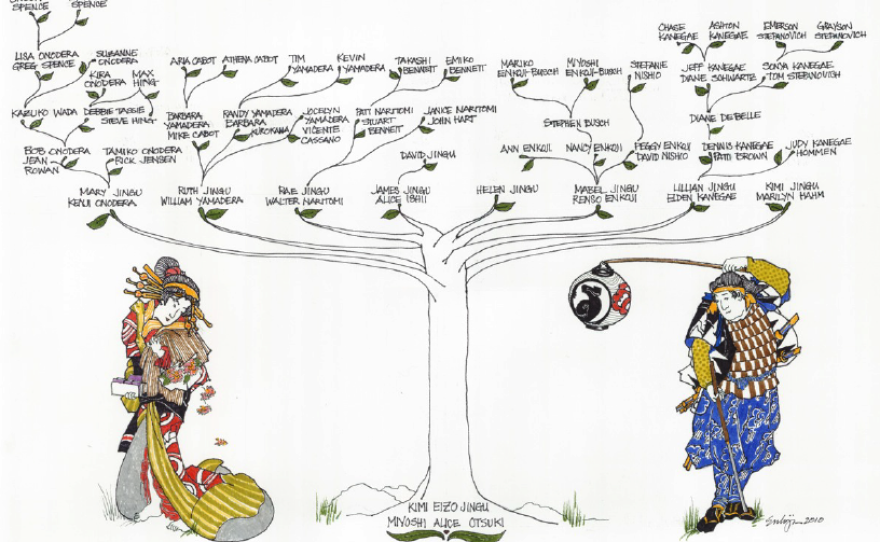
Granddaughter Pati Bennett Narutomi says the family and Ray Lambert had a deep friendship, and eventually the Jingus named a daughter after him.
“My mother's Ray, but she changed the spelling of hers to R-A-E, where his was R-A-Y,” Narutomi said.
Despite the friendship, life as they knew it ended for the family with World War II.
The Jingus had been living on the property for 23 years when everything suddenly fell apart, destroyed by a single event half a world away.
In 1941, President Franklin Delano Roosevelt spoke before Congress about the Dec. 7 attack on Pearl Harbor, which he famously referred to as "a date which will live in infamy.”
The following day, Dec. 8, 1941, the United States Congress voted 82-0 to declare war on Japan. The remaining Jingu family — Kimi had died suddenly in 1938 — was left to find a place to live during a time when anti-Japanese sentiment was at its height.


Members of Travis Park Methodist Church helped the Jingu family find housing. The city then renamed the Japanese Tea Garden the Chinese Tea Garden and moved a Chinese American family into the stone home.
Eventually, Narutomi said, the family moved to California.
“The Jingu family, they're pretty tough, and I think that when they went to the West Coast, they made the best of it,” she said.
“And for Grandma, she started having all these small parts in movies, and that was a whole other life for her.”
After their move to Los Angles, Miyoshi started acting in movies.
Barb Yamadera Cabot remembered some of her grandmother Miyoshi’s stories.
“Her big movie role was “Tea House of the August Moon,” with Marlon Brando,” Cabot said.
Her grandmother Miyoshi described Brando as a loner on set. But one day in the cafeteria, he asked her to join him.
Cabot recalled her grandmother’s memory of Brando: "'Mama-san, sit with me.’ He then asked her, ‘Where are you from, Mama-san’? She looked at him proudly, and with a big smile, she said, ‘Brando-san, I'm from Texas!’”
She said that surprised him, and he laughed.
Miyoshi went on to appear in several movies and television shows. The family seemed to thrive in California.
In 1984, back in San Antonio, the city corrected the injustice that the Jingu family had experienced.
Mayor Henry Cisneros decided to restore the garden’s original name. The city held a rededication ceremony honoring the Jingu family. Cisneros said the family deserved the recognition.
“It seemed like the logical thing to do — to rename it for the original people who had the idea, did the work and should get credit for it," Cisneros said.
The Jingu family returned to San Antonio for the occasion. Narutomi said the visit gave her a new appreciation for her family’s history.
“It still was amazing to me that this was my mother's playground, where she was raised,” she said.
Barb Yamadera Cabot grew up close to her grandmother.
“From the age of 4 till I was 18, my grandmother and I shared a bedroom. My bedtime stories were stories about her life,” she said.
Cabot said that every night, her grandmother began story telling by saying, "Once upon a time, I lived in a magical garden. ..."
That she did. And a hundred years after being built, their former home still bears the family name: the Jingu House.