© 2026 Texas Public Radio
Real. Reliable. Texas Public Radio.
Play Live Radio
Next Up:
0:00
0:00
0:00 0:00
Available On Air Stations

Investigation Underway Into Balloon Crash That Killed 16

Credit Louisa Jonas
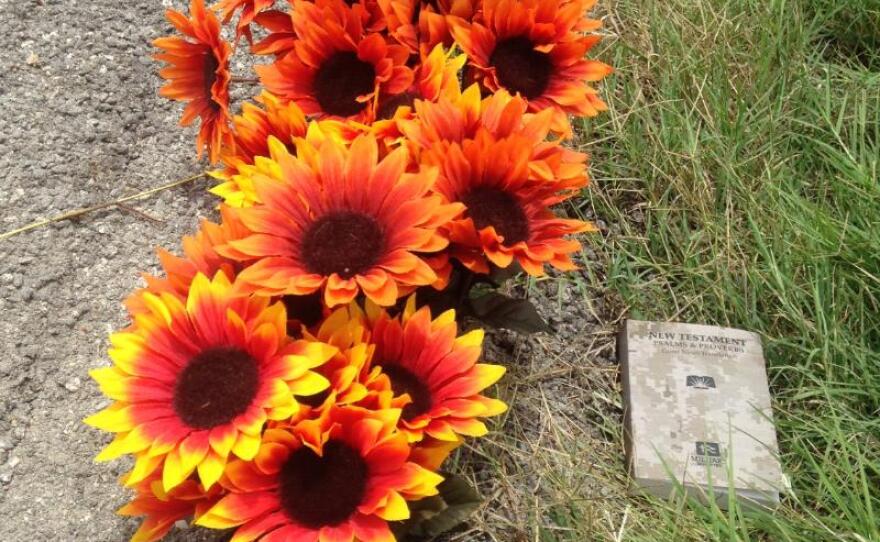
John Cook, an area resident who visited the crash site to pay his respects.

The National Transportation Safety Board, or NTSB, has  confirmed that the balloon which crashed Saturday morning near Lockhart, killing 16 people, hit power lines on its way down.

In a sunbaked pasture about 60 miles northeast of San Antonio, NTSB board member Robert Sumwalt said investigators don’t yet know if contact with the power lines caused the balloon to catch fire, or if the balloon was already on fire when it hit the lines.

Sumwalt says the investigation strategy will focus on three things: "We look at the human, the machine, and the environment. Really what that means is, as far as the human, we’re going to be looking at the operator. We want to know about the company itself. We want to know about the pilot. What was the maintenance like of that balloon? We’ll be interviewing witnesses and looking at witness video. We’ve brought in a fire specialist."

Sumwalt says investigators will examine cell phones, cameras and an Ipad found near the crash site. All 16 bodies have been recovered in the area around the gondola, but authorities aren’t confirming their identities. Sumwalt says the passengers were flying in a Kupicek balloon manufactured in the Czech Republic, and there have been several other accidents involving Kupicek balloons.

John Cook was among the area residents unnerved by the crash who drove to the scene.

"I just had to come out here and look around and just see what I could see, and maybe settle my nerves a little bit. I just feel so sorry about the people that were in it and their families because, you know, I just don’t understand it," Cook says.

Sumwalt is urging anyone who witnessed the crash or has related video to contact the NTSB.

Louisa Jonas is an independent public radio producer, environmental writer, and radio production teacher based in Baltimore. She is thrilled to have been a PRX STEM Story Project recipient for which she produced a piece about periodical cicadas. Her work includes documentaries about spawning horseshoe crabs and migratory shorebirds aired on NPR's Weekend All Things Considered. Louisa previously worked as the podcast producer at WYPR 88.1FM in Baltimore. There she created and produced two documentary podcast series: Natural Maryland and Ascending: Baltimore School for the Arts. The Nature Conservancy selected her documentaries for their podcast Nature Stories. She has also produced for the Chemical Heritage Foundation’s Distillations Podcast. Louisa is editor of the book Backyard Carolina: Two Decades of Public Radio Commentary. She holds an M.F.A. in Creative Writing from University of North Carolina Wilmington. Her training also includes journalism fellowships from the Science Literacy Project and the Knight Digital Media Center, both in Berkeley, CA. Most recently she received a journalism fellowship through Woods Hole Oceanographic Institution where she traveled to Toolik Field Station in Arctic Alaska to study climate change. In addition to her work as an independent producer, she teaches radio production classes at Howard Community College to a great group of budding journalists. She has worked as an environmental educator and canoe instructor but has yet to convince a great blue heron to squawk for her microphone…she remains undeterred.